
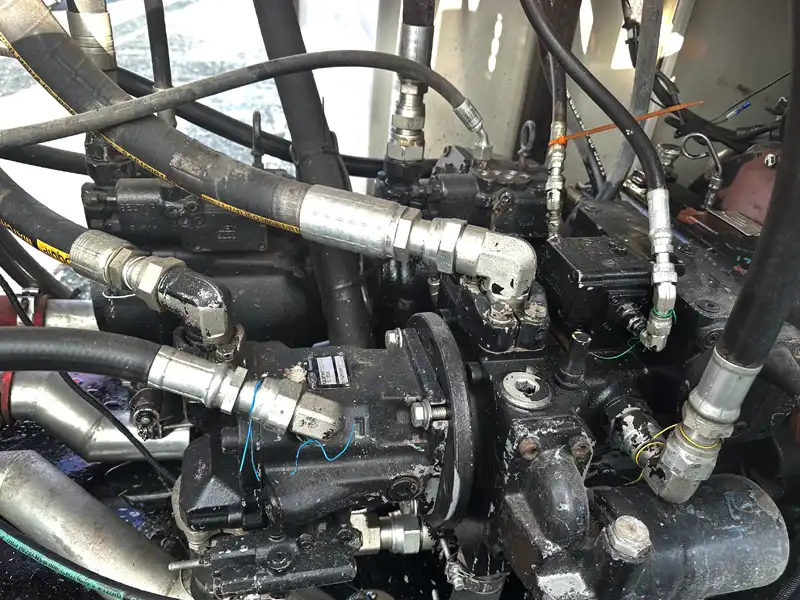
Total Hydraulics has been repairing and building hydraulic hose assemblies for many years across various industrial equipment applications. Over that time, we’ve learned a lot. This short article is a list of the top factors to consider to ensure a successful hose assembly.
1. Correct Hose Selection
Choosing the right hose for your application is crucial. Consider the following:
- Pressure Rating: Ensure the hose can handle the maximum operating pressure of your system.
- Temperature Range: Select a hose that can withstand the operating temperature range, including both the fluid and ambient temperatures.
- Fluid Compatibility: Verify that the hose material is compatible with the hydraulic fluid used in your system.
- Size: The hose’s inner diameter should match the flow requirements to avoid pressure drops and inefficiencies.
- Environmental Considerations: Ensure the hose material can withstand exposure to chemicals present in the environment, the external/internal temperatures and if necessary, UV resistance
2. Proper Fittings and Connections
Using the correct fittings and connections is vital for leak-free and reliable operation:
- Compatibility: Ensure fittings are compatible with the hose and the equipment.
- Crimping: Proper crimping of fittings is essential to prevent leaks and ensure a secure connection.
- Torque: Follow manufacturer specifications for tightening fittings to avoid over-tightening or under-tightening.
3. Routing and Installation
Proper routing and installation of hydraulic hoses can prevent premature failure:
- Avoid Twisting: Twisting the hose can reduce its lifespan and lead to failure. Use swivel fittings if necessary.
- Bend Radius: Adhere to the minimum bend radius specified by the manufacturer to prevent kinking and damage.
- Protection: Use protective sleeves or guards in areas where the hose may be exposed to abrasion or external damage.
- Clamping: Secure hoses with clamps to prevent movement and reduce stress on connections.
4. Regular Inspection and Maintenance
Routine inspection and maintenance can extend the life of hydraulic hoses:
- Visual Inspection: Regularly check for signs of wear, such as cracks, abrasions, or leaks.
- Pressure Testing: Periodically test the hose assembly under pressure to ensure it can handle the system’s operating conditions.
- Replacement: Replace hoses that show signs of wear or have reached their recommended service life.
5. Hose Assembly Information
When installing hoses, to ensure easy access to information during maintenance, make sure you include:
- Date installed
- Pressure rating of hose
- Hose size
- Crimp fittings
If you have any questions or need advice on any of the above, just reach out at info@totalhydraulics.ca.