
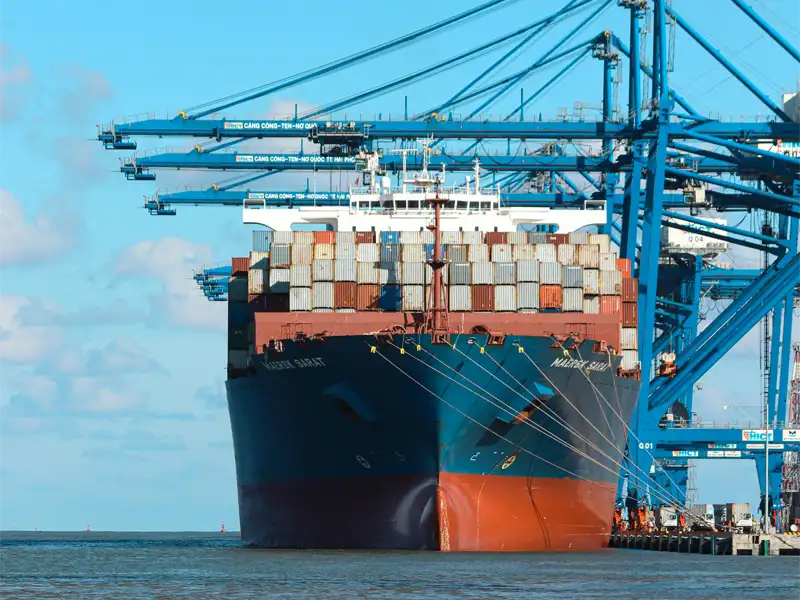
The world has shifted dramatically regarding trade relationships in the last few months. The initial round of tariffs from the Trump administration and the recent Liberation Day have sent stock markets tumbling; countries and individual companies scrambling to find ways to adapt to the new reality. In this post, we will attempt to summarize the potential impact of the tariffs on the Canadian fluid power industry.
1. Rising Costs on Imported Components and Materials
Many Canadian hydraulic manufacturers rely on imported components such as pumps, valves, seals, fittings, and aluminum or steel materials—often sourced from the United States, China, or Europe.
Key risks include:
- Tariff pass-through costs from suppliers based in affected regions.
- Cross-border duties on U.S.-bound exports, especially when Canadian parts are assembled using Chinese components.
- Retaliatory tariffs, such as those Canada imposed in response to U.S. Section 232 tariffs on steel and aluminum.
While some of these tariffs have been suspended or renegotiated, uncertainty remains. For example, according to the Canadian Manufacturers & Exporters (CME), many firms still face “shadow tariffs” through increased compliance costs and price volatility, even when goods technically fall under trade agreements like USMCA.
2. Competitive Pressure from U.S. Reshoring Initiatives
As the U.S. doubles down on reshoring manufacturing—fueled by legislation like the Inflation Reduction Act and CHIPS Act—Canadian hydraulic firms risk being squeezed out of lucrative supply chains.
Potential consequences:
- Loss of U.S. contracts as buyers prioritize “Made in America” components to qualify for government subsidies or local-content incentives.
- Stricter procurement policies that exclude foreign-made parts, regardless of quality or price.
According to the Wilson Center, these measures could shift procurement priorities away from NAFTA-era integration and toward nationalized sourcing, posing a challenge to even long-standing Canadian suppliers.
3. Disruptions in Global Supply Chains
Tariffs are just one part of a larger trend that includes supply chain volatility, port delays, and international uncertainty. These disruptions can make it harder for Canadian firms to secure critical components—especially if they rely heavily on Asian suppliers.
Current issues include:
- Extended lead times on hydraulic assemblies and electronics.
- Surging shipping costs, which disproportionately affect SMEs.
- Quality control issues when scrambling for alternate vendors.
Many companies are now reassessing their sourcing strategies to include nearshoring (e.g., Mexico) or domestic production wherever possible.
4. Currency Exchange Risk
Tariff news often triggers volatility in currency markets. For Canadian companies that operate on slim margins, even small shifts in the CAD-USD exchange rate can have significant implications.
Currency dynamics:
- A weaker Canadian dollar increases the cost of imported raw materials and components.
- A stronger Canadian dollar can hurt export competitiveness, especially in U.S. and European markets.
- Companies without robust currency hedging strategies may find themselves vulnerable to swings that are out of their control.
5. Opportunities in Free Trade Zones
It’s not all bad news. Canada is uniquely positioned with access to over 50 international markets through trade agreements like:
- USMCA (United States–Mexico–Canada Agreement)
- CETA (Comprehensive Economic and Trade Agreement with the EU)
- CPTPP (Comprehensive and Progressive Agreement for Trans-Pacific Partnership)
These agreements create export opportunities in regions where Canadian hydraulic components may avoid tariffs entirely, giving them a competitive advantage over U.S. or Chinese counterparts.
For instance, under CETA, Canadian-made hydraulic pumps and fluid connectors face zero tariffs when exported to the European Union, making EU partnerships more attractive Source: Government of Canada – Trade Agreements.
6. How Canadian Hydraulic Firms Can Respond
In this volatile climate, proactive strategy matters more than ever. Here are key ways Canadian companies can stay resilient:
Diversify Your Supply Chain
- Source from non-tariffed countries or expand relationships with domestic and U.S. suppliers.
- Consider dual-sourcing critical components to hedge against disruptions.
Invest in Local Capabilities
- Automate production lines to reduce per-unit costs and make local production more viable.
- Explore co-manufacturing partnerships in the U.S. to retain access to “Buy American” contracts.
Stay Active in Industry Advocacy
- Engage with groups like the Canadian Fluid Power Association (CFPA) or CME to help shape trade policy and lobby for exclusions.
- Stay informed on developments in trade law and customs classifications that could reduce tariff exposure.
Rethink Product Design
- Redesign components to avoid tariffed materials or reduce total part count.
- Explore additive manufacturing or modular designs to improve agility and reduce overhead.
Tariffs will have tangible and ongoing impacts on Canadian hydraulic companies. Navigating this evolving trade environment requires agility, creativity, and an informed strategy. At Total Hydraulics we will continue to support our customers through this time ensuring your equipment is running as efficiently as possible. Through our acquisition of Pioneer, we are also able to source a range of products from a global network helping ensure we find the most cost-effective options for our customers in these trying times.
Sources:
- Long-term effects of tariff on Canadian manufactures – BNN Bloomberg
- Canadian Fluid Power Association (CFPA)
- Government of Canada – Trade Agreements
- Wilson Center – U.S. Industrial Policy Analysis